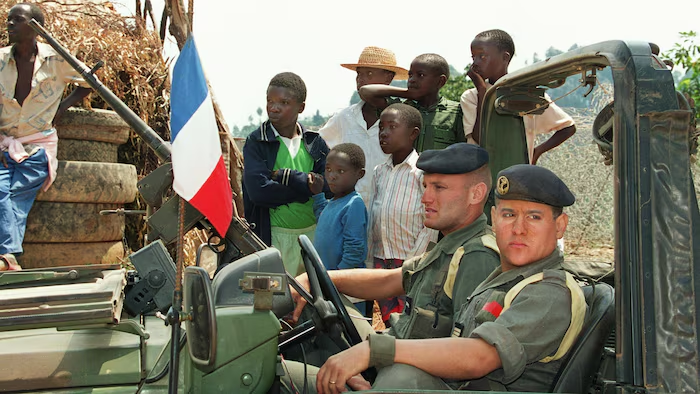



Every year, during the commemoration of the 1994 Genocide against the Tutsi, Rwanda pauses to remember, reflect, and honor the lives that were lost. It is a time of unity, mourning, and education. However, in today’s digital age, this sacred period is increasingly disrupted by the spread of false information, denial, and distortion often amplified through social media and, at times, even by international platforms.
This reality places a powerful responsibility on the shoulders of Rwandan youth.
Young people are not just passive consumers of information; they are active participants in shaping narratives. With smartphones in their hands and global platforms at their fingertips, they hold the tools to either allow misinformation to spread or to challenge it with truth and integrity.
Defending the truth does not mean engaging in online conflict or hostility. It means being informed, thoughtful, and intentional. It starts with understanding the history of the Genocide against the Tutsi, its causes, its execution, and its consequences. Knowledge is the strongest weapon against denial and revisionism.
When false information appears, whether in a tweet, a video, or a news article, Rwandan youth have the ability to respond with facts. This can be done by sharing verified sources, correcting inaccuracies respectfully, and amplifying voices that tell authentic stories of survivors and the nation’s journey of rebuilding. Silence in the face of distortion can allow harmful narratives to grow, but informed voices can stop them in their tracks.
Equally important is the role of critical thinking. Not every piece of content deserves to be shared. Before reposting or reacting, young people must ask: Is this accurate? Is this respectful? Does it contribute to truth or confusion? In a time where misinformation spreads quickly, responsibility online is more important than ever.
Beyond correcting falsehoods, Rwandan youth can actively promote truth by creating meaningful content. Articles, videos, podcasts, and social media posts that educate others about the Genocide against the Tutsi help preserve memory and ensure that history is neither forgotten nor rewritten. Telling these stories in a human, relatable way helps the global community understand not just what happened, but why remembrance matters.
This responsibility is not a burden, it is a form of patriotism and dignity. Defending truth honors the victims, supports survivors, and protects the integrity of Rwanda’s history. It ensures that “Never Again” is not just a slogan, but a commitment upheld through action.
In a world where information moves fast and facts are sometimes blurred, the voice of an informed, conscious young person can make all the difference. During this commemoration period, and beyond, Rwandan youth must rise to this role, not with anger, but with clarity, respect, and unwavering commitment to the truth.
Because preserving truth is preserving memory. And preserving memory is preserving humanity.